

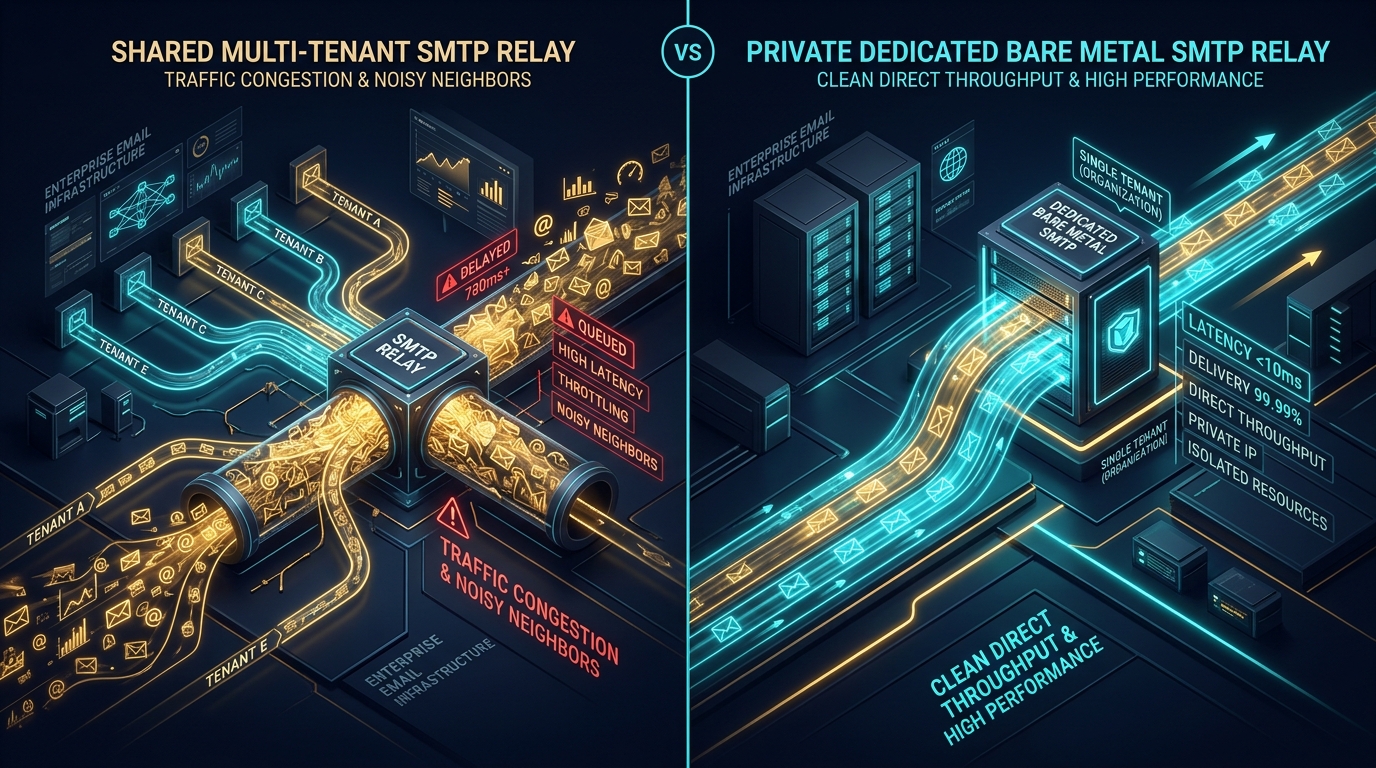
← Email Infrastructure Comparisons 2027 Infrastructure Architecture Reference Shared SMTP vs Dedicated SMTP: 2027 Reputation Isolation, Cost Economics & Transition Thresholds Deciding between shared SMTP relay infrastructure and a dedicated SMTP server cluster is the single most consequential architectural choice in email deliverability. Shared SMTP aggregates outbound message traffic from dozens—or hundreds—of distinct customers across […]
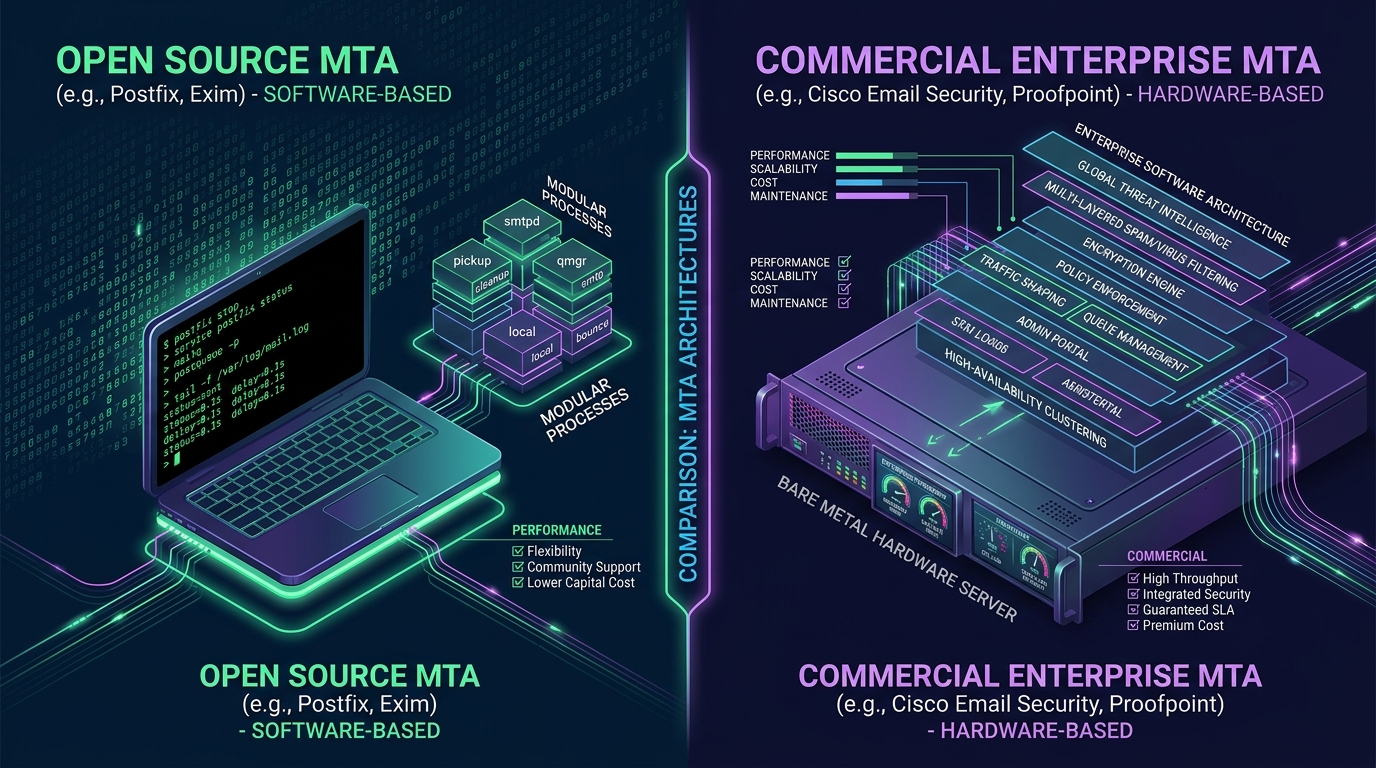
← Email Infrastructure Comparisons PowerMTA Hub → 2027 Infrastructure Architecture Reference Open Source MTA vs Commercial MTA: 2027 Postfix/KumoMTA vs PowerMTA/MailerQ Comparison Selecting the Mail Transfer Agent (MTA) layer for high-volume email infrastructure centers on a critical strategic choice: community-driven open source vs. vendor-licensed commercial software. For over two decades, commercial MTAs—most notably Port25 PowerMTA […]
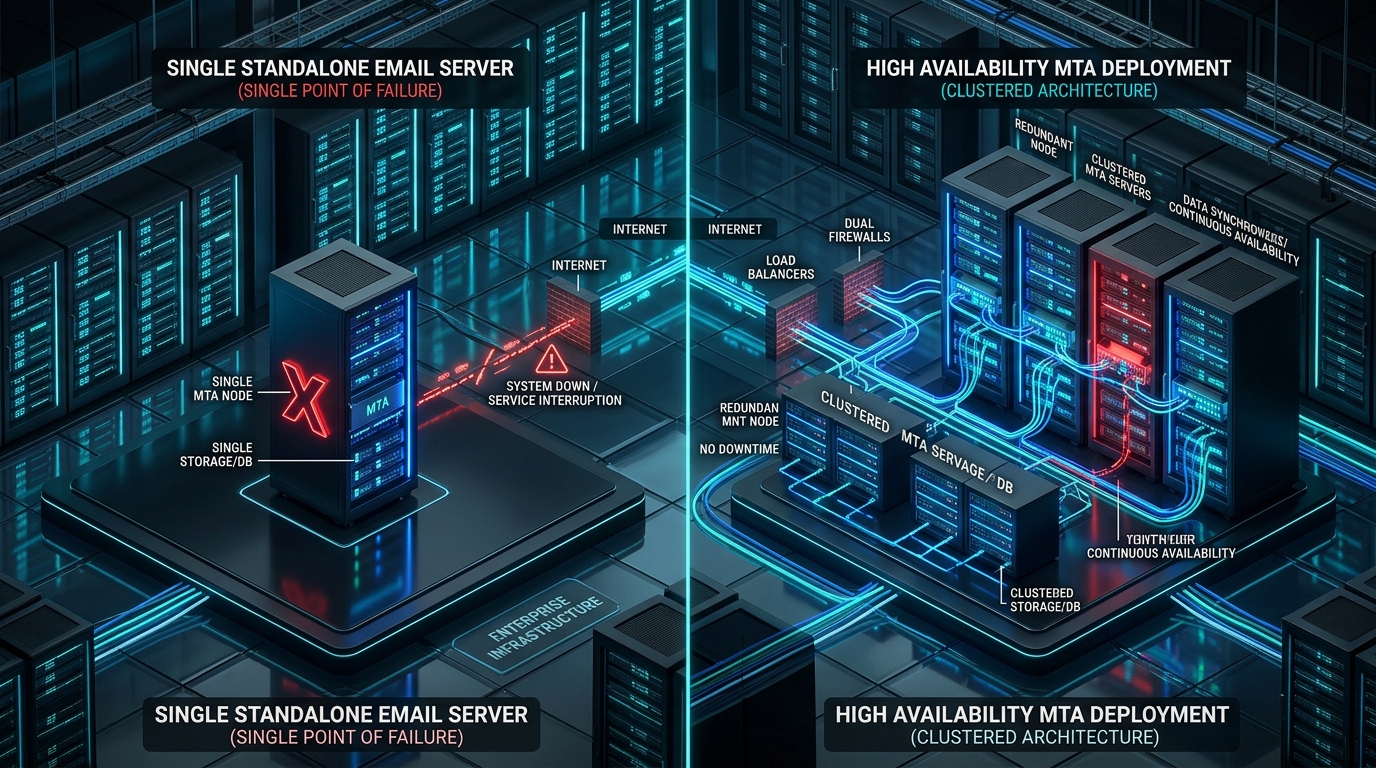
← Email Infrastructure Comparisons 2027 Infrastructure Architecture Reference Single Server vs Multi-Server Email Infrastructure: 2027 Scaling, Failover Patterns & Queue Sharding Modern email architecture is defined by three competing operational forces: throughput velocity, high availability (99.99% uptime), and engineering complexity. A single-server architecture consolidates all mail delivery layers—MTA submission, local disk spooling, DKIM signing, authentication […]
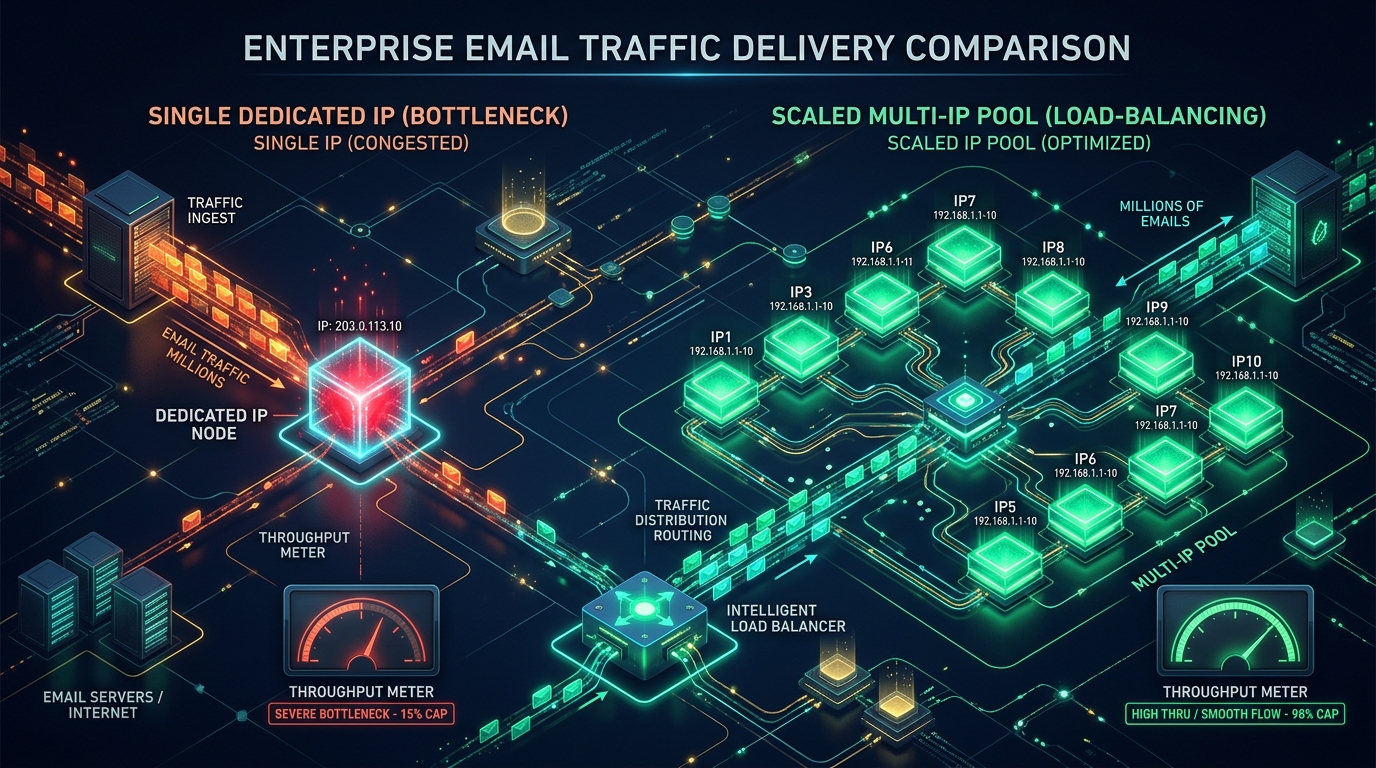
← Email Infrastructure Comparisons 2027 Infrastructure Architecture Reference Single Dedicated IP vs Multi-IP Pool: 2027 Volume Thresholds, Pool Architecture & Deliverability Mechanics Every scaling email programme confronts a defining operational crossroads: relying on a single dedicated IPv4 address versus architecting a multi-IP pool. A single dedicated IP represents total concentration: one IP, one reputation score, […]
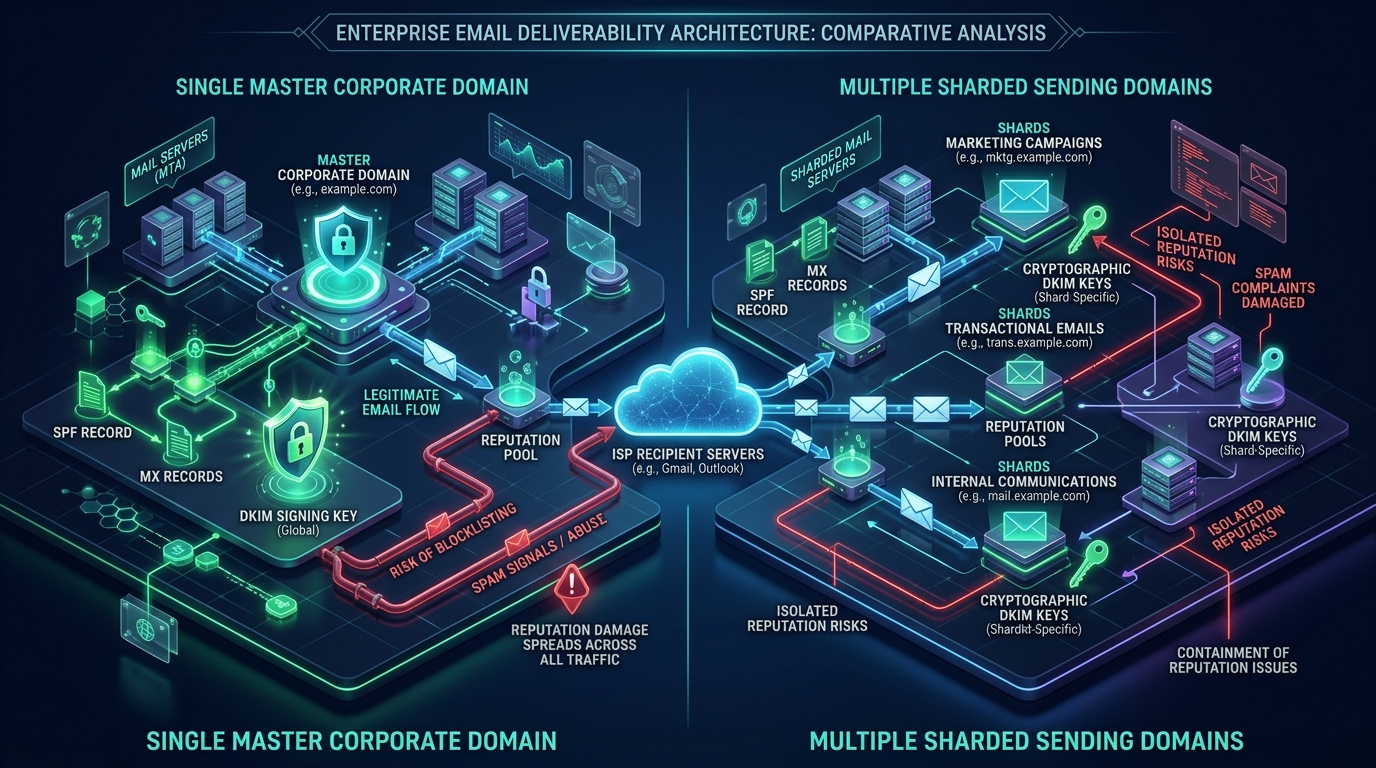
← Email Infrastructure Comparisons 2027 Infrastructure Architecture Reference Single-Domain vs Multi-Domain Sending: 2027 Reputation Isolation, Volume Thresholds & Subdomain Topologies Designing an enterprise email sending architecture centers around a fundamental architectural trade-off: simplicity vs. blast-radius isolation. A single-domain architecture dispatches all outbound streams (transactional alerts, billing notices, marketing newsletters, and sales inquiries) from a unified […]
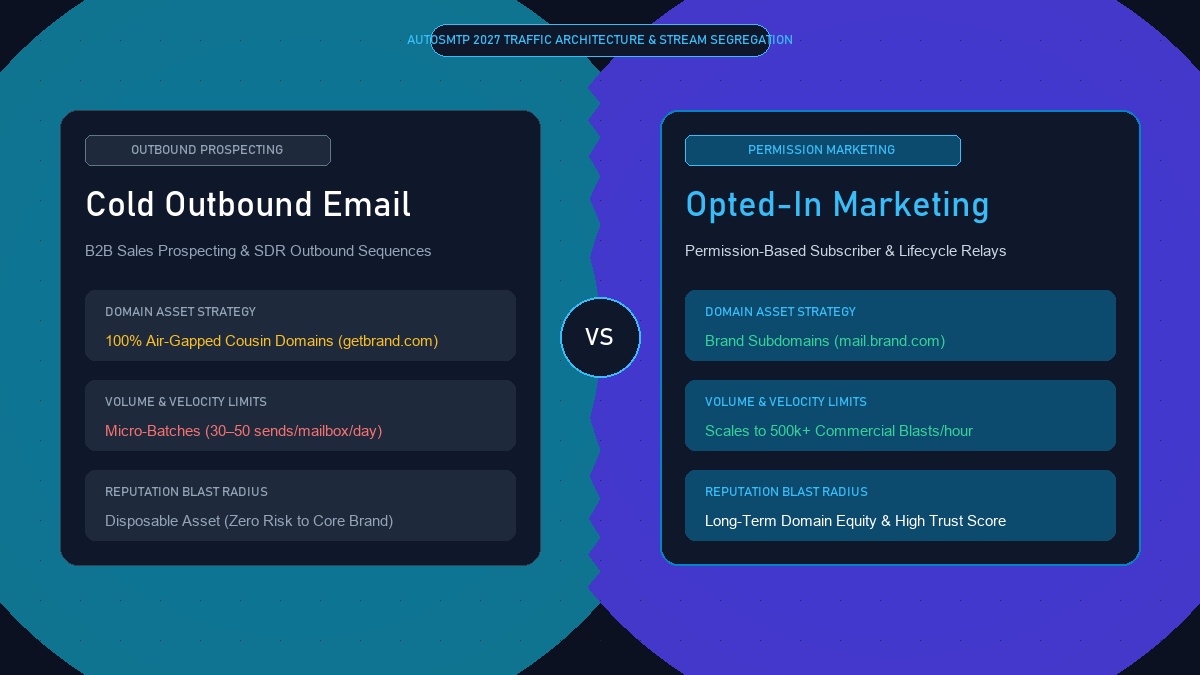
← Email Infrastructure Comparisons 2027 Infrastructure Architecture Reference Cold Email vs Marketing Email Infrastructure: 2027 Multi-Inbox Architecture, Compliance & Stream Separation Cold outreach and opt-in email marketing represent two fundamentally incompatible operational paradigms. Marketing email infrastructure is built around high-throughput, concentrated sending from centralized dedicated IP pools or cloud ESPs (SendGrid, Mailgun, Klaviyo), delivering millions […]
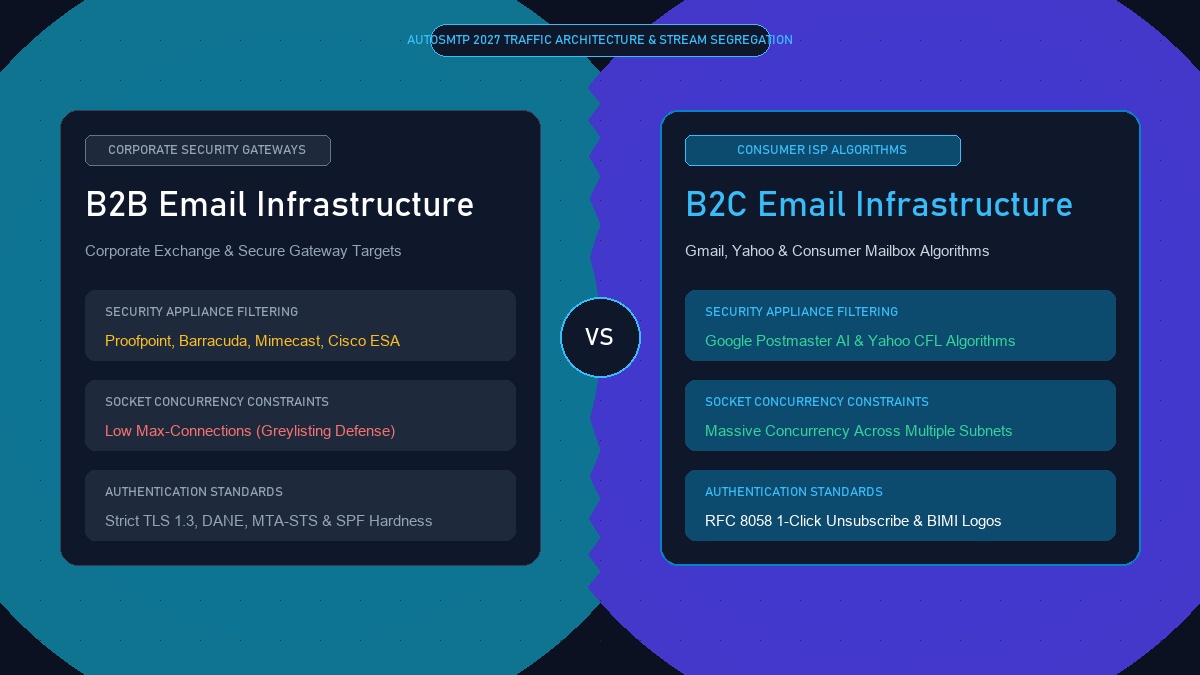
← Email Infrastructure Comparisons 2027 Infrastructure Architecture Reference B2B vs B2C Email Infrastructure: 2027 Recipient Environments, Security Gateways, Economics & IP Topologies While B2B and B2C email operate across the identical RFC 5321 SMTP transport protocol, they function in completely distinct threat landscapes, economic models, and mailbox environments. B2B email infrastructure delivers into corporate inboxes […]
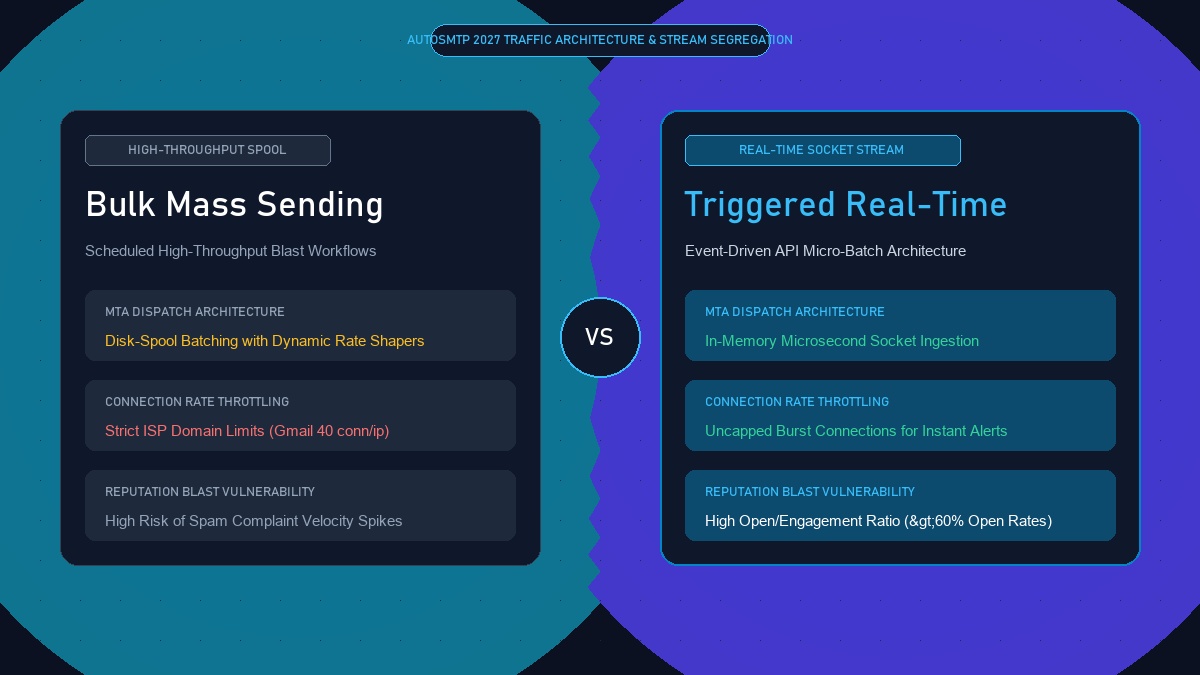
← Email Infrastructure Comparisons 2027 Engineering Architecture Reference Bulk Email vs Triggered Email Infrastructure: 2027 Event-Driven Pipelines, Queue Segregation & Collision Avoidance Bulk and triggered email streams represent two fundamentally conflicting engineering patterns. Bulk email infrastructure is pre-scheduled, batch-oriented, and throughput-optimised—designed to blast hundreds of thousands to millions of uniform messages across hours without exceeding […]
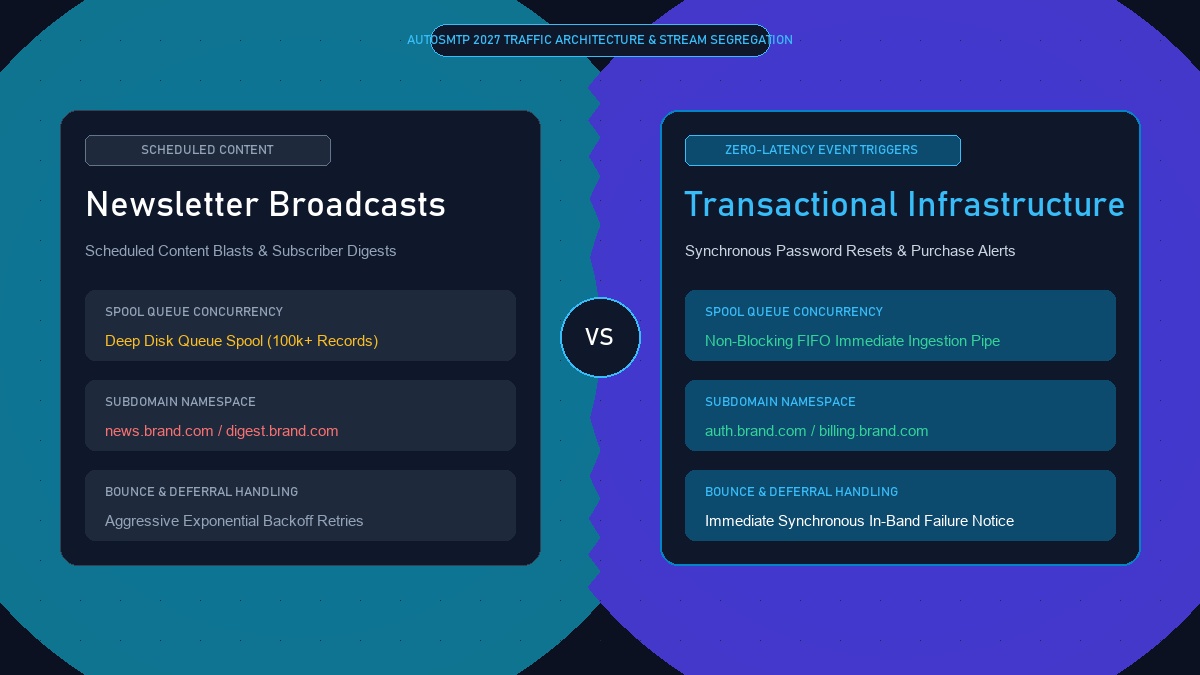
← Email Infrastructure Comparisons 2027 Publisher Architecture Review Newsletter vs Transactional Email Infrastructure: 2027 Stream Separation Architecture & Delivery Economics Executive Summary: Digital publishers, media brands, and SaaS companies operate two fundamentally distinct messaging channels: editorial newsletters (mass scheduled broadcasts sent to 50,000–1,000,000+ subscribers simultaneously) and transactional infrastructure (event-driven user notifications, password resets, and subscription […]
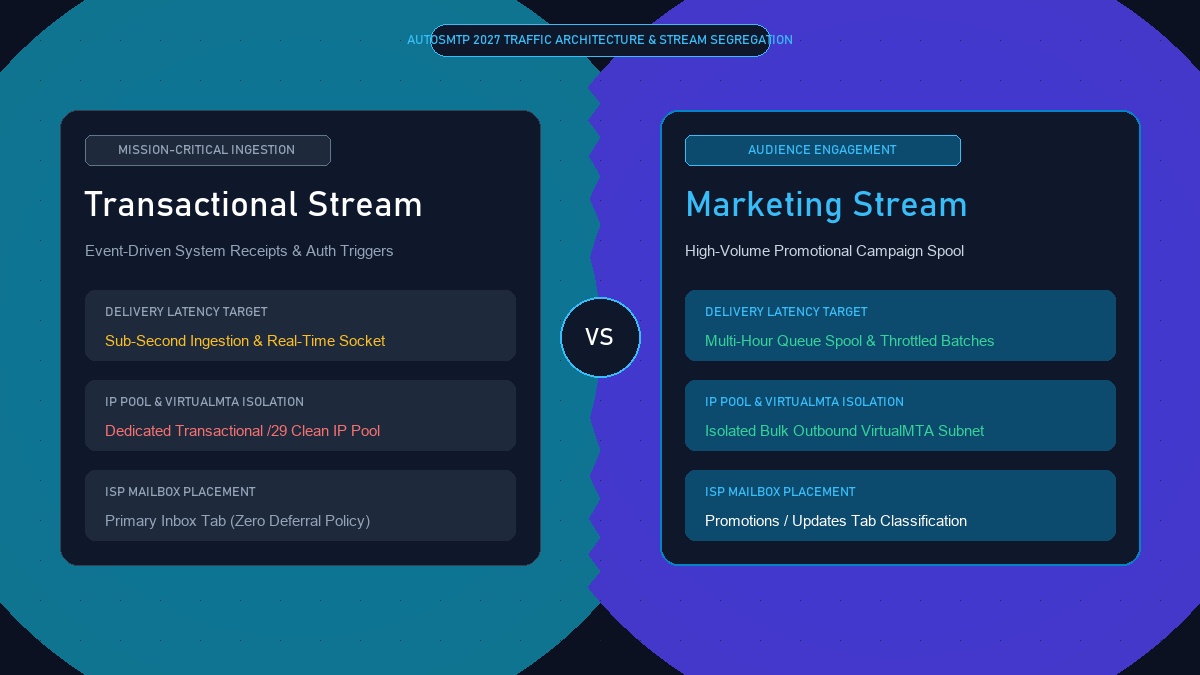
← Email Infrastructure Comparisons 2027 Traffic Architecture Review Transactional vs Marketing Email Infrastructure: 2027 Stream Separation, Priority Queues & Dedicated IP Pools Executive Summary: Mixing transactional and marketing email on a single sending pipeline is one of the most hazardous architectural anti-patterns in modern software engineering. While both streams transmit MIME-encoded messages over SMTP, their […]