

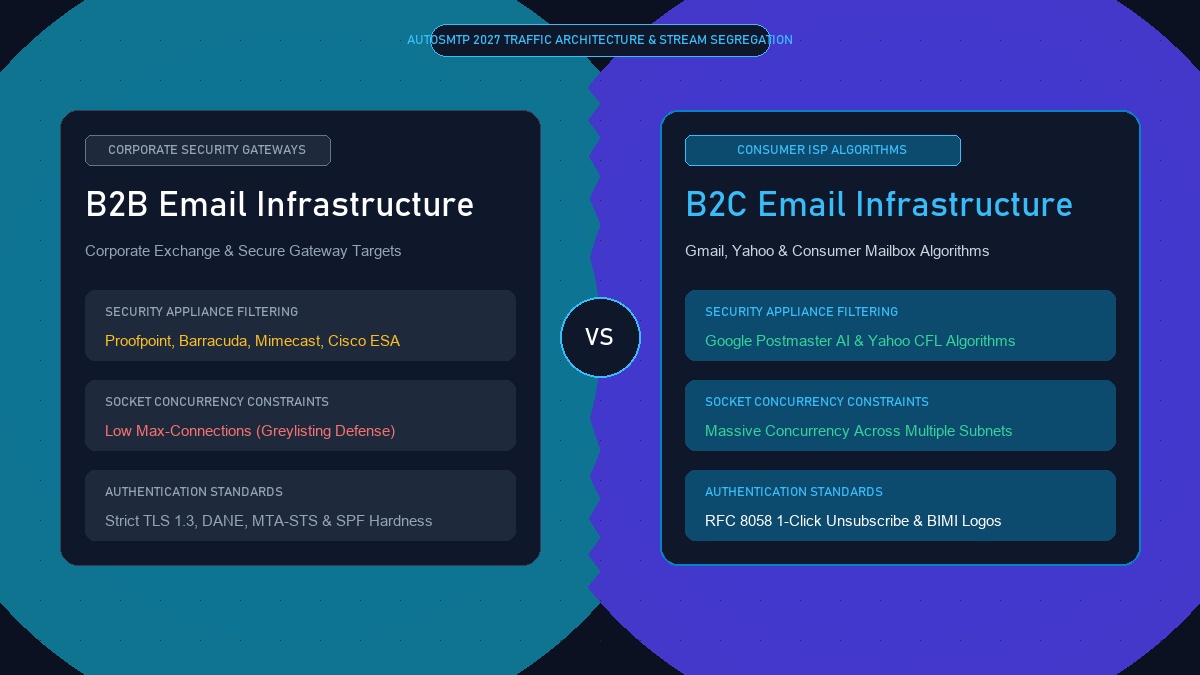
← Email Infrastructure Comparisons 2027 Infrastructure Architecture Reference B2B vs B2C Email Infrastructure: 2027 Recipient Environments, Security Gateways, Economics & IP Topologies While B2B and B2C email operate across the identical RFC 5321 SMTP transport protocol, they function in completely distinct threat landscapes, economic models, and mailbox environments. B2B email infrastructure delivers into corporate inboxes […]
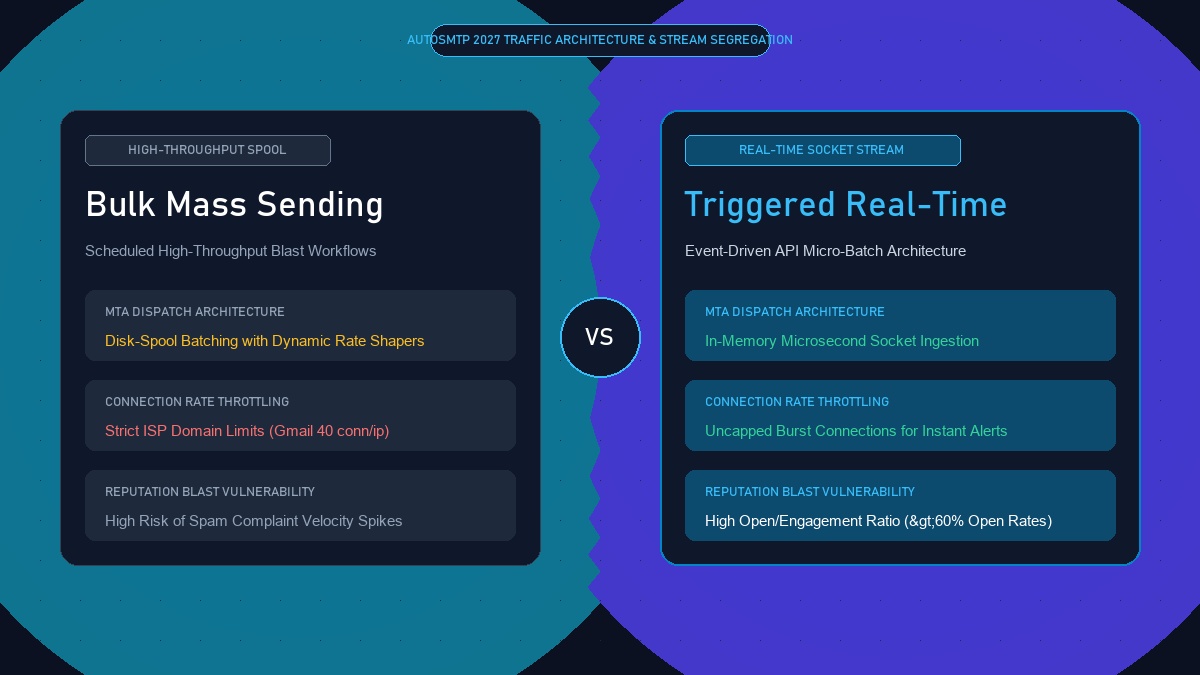
← Email Infrastructure Comparisons 2027 Engineering Architecture Reference Bulk Email vs Triggered Email Infrastructure: 2027 Event-Driven Pipelines, Queue Segregation & Collision Avoidance Bulk and triggered email streams represent two fundamentally conflicting engineering patterns. Bulk email infrastructure is pre-scheduled, batch-oriented, and throughput-optimised—designed to blast hundreds of thousands to millions of uniform messages across hours without exceeding […]
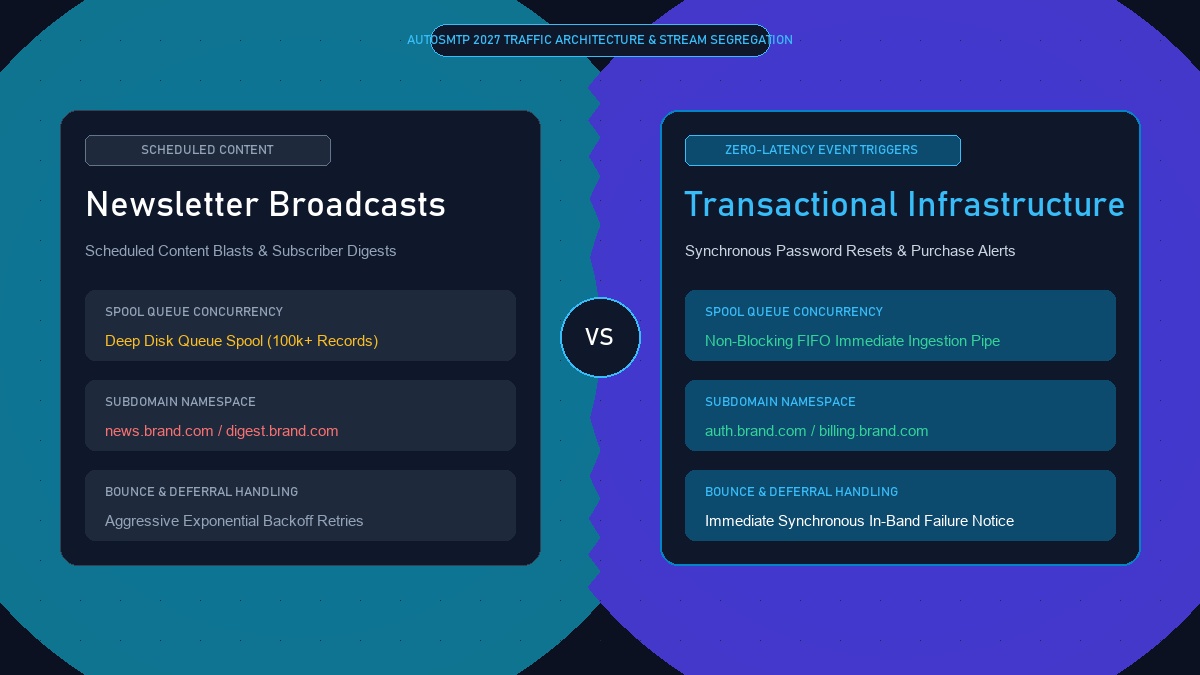
← Email Infrastructure Comparisons 2027 Publisher Architecture Review Newsletter vs Transactional Email Infrastructure: 2027 Stream Separation Architecture & Delivery Economics Executive Summary: Digital publishers, media brands, and SaaS companies operate two fundamentally distinct messaging channels: editorial newsletters (mass scheduled broadcasts sent to 50,000–1,000,000+ subscribers simultaneously) and transactional infrastructure (event-driven user notifications, password resets, and subscription […]
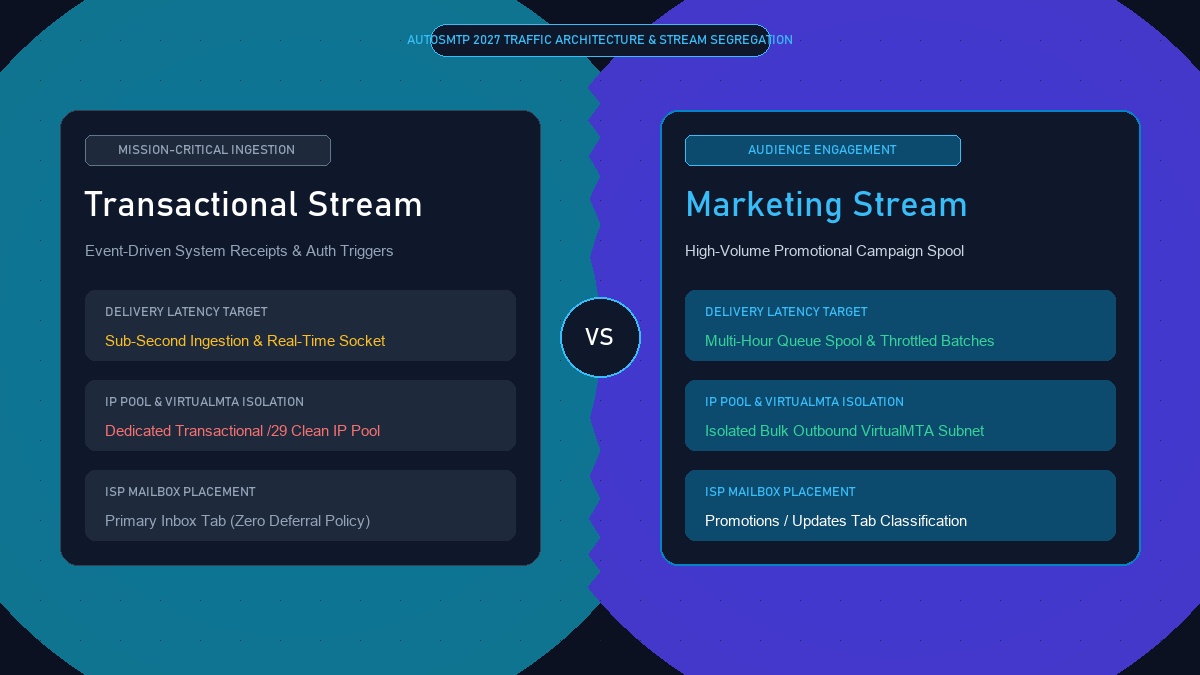
← Email Infrastructure Comparisons 2027 Traffic Architecture Review Transactional vs Marketing Email Infrastructure: 2027 Stream Separation, Priority Queues & Dedicated IP Pools Executive Summary: Mixing transactional and marketing email on a single sending pipeline is one of the most hazardous architectural anti-patterns in modern software engineering. While both streams transmit MIME-encoded messages over SMTP, their […]
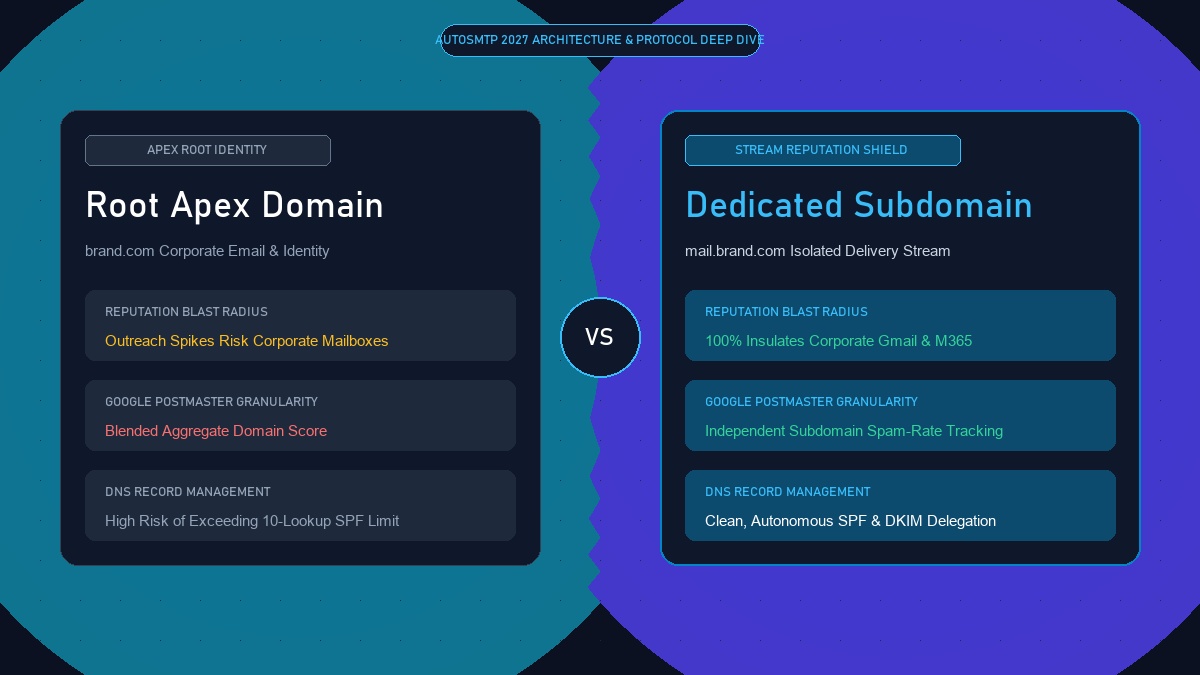
← Email Infrastructure Comparisons 2027 Domain Architecture Review Dedicated Domain vs Subdomain for Email: 2027 Reputation Isolation, Cold Outreach & Warmup Trade-Offs Executive Summary: Deciding whether to send email from your primary apex root domain (brand.com), a dedicated subdomain (mail.brand.com), or an entirely separate dedicated root domain (getbrand.com) is one of the most consequential architectural […]
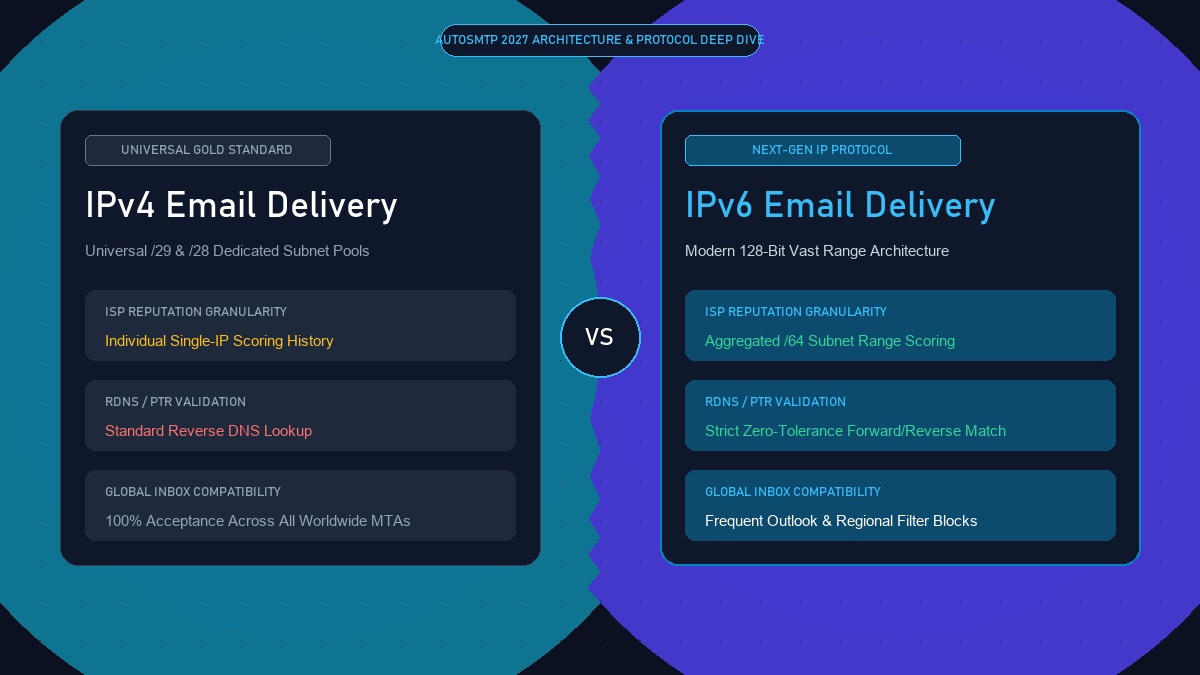
← Email Infrastructure Comparisons 2027 Network Architecture Review IPv4 vs IPv6 Email Sending: 2027 Deliverability Realities, Strict FCrDNS & Dual-Stack MTA Architecture Executive Summary: The ongoing transition from IPv4 to IPv6 has transformed web traffic and cloud networking, yet email transport remains overwhelmingly governed by IPv4 realities. While IPv6 provides a virtually limitless address space […]
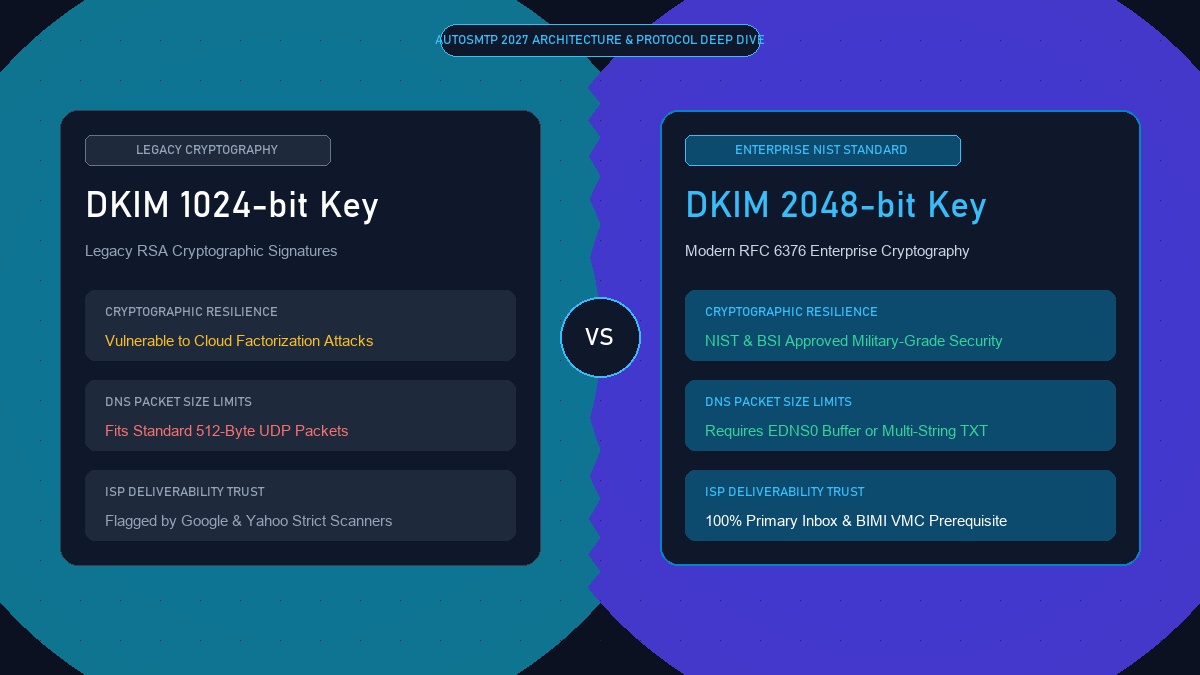
← Email Infrastructure Comparisons 2027 Cryptographic Architecture Review DKIM 1024 vs 2048-Bit Key: 2027 RSA Security, DNS Limits, Ed25519 & Deliverability Architecture Executive Summary: DomainKeys Identified Mail (DKIM, RFC 6376) provides the cryptographic trust foundation for modern internet messaging, enabling mail servers to verify that email content has not been tampered with in transit. In […]
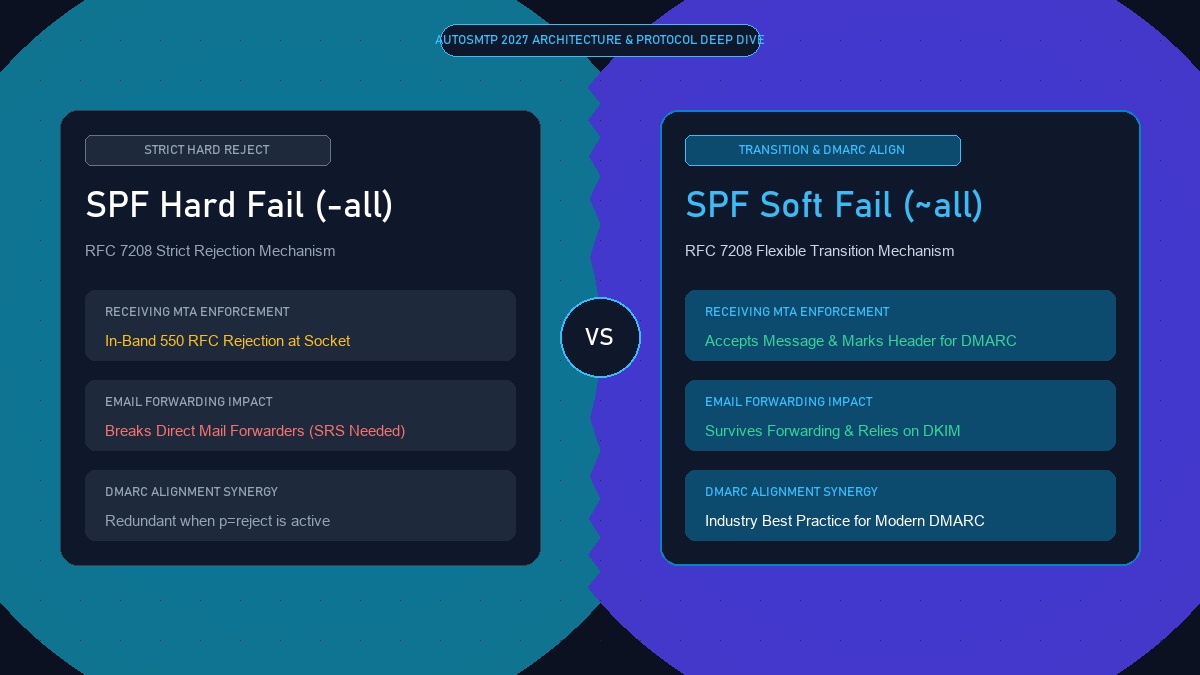
← Email Infrastructure Comparisons 2027 Protocol Architecture Review SPF Hard Fail (-all) vs Soft Fail (~all): 2027 RFC 7208 Qualifier, DMARC Synergy & Forwarding Decision Guide Executive Summary: The trailing qualifier in your Sender Policy Framework (SPF) record—choosing between -all (Hard Fail) and ~all (Soft Fail)—is one of the most frequently misunderstood decisions in email […]
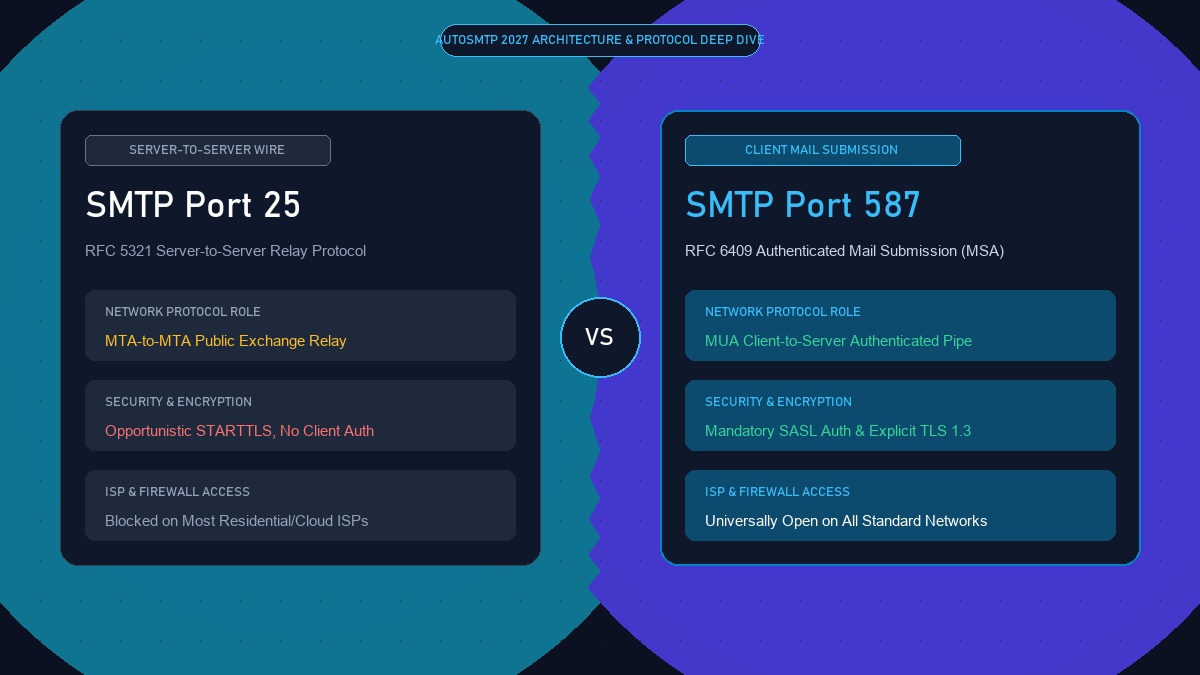
← Email Infrastructure Comparisons 2027 Protocol Architecture Review SMTP Port 25 vs 587: 2027 Submission, Relay, STARTTLS & Cloud Firewall Decision Framework Executive Summary: The distinction between SMTP Port 25 and Port 587 represents one of the most critical foundational boundaries in email transport architecture. Defined by RFC 5321 (Port 25) and RFC 6409 (Port […]
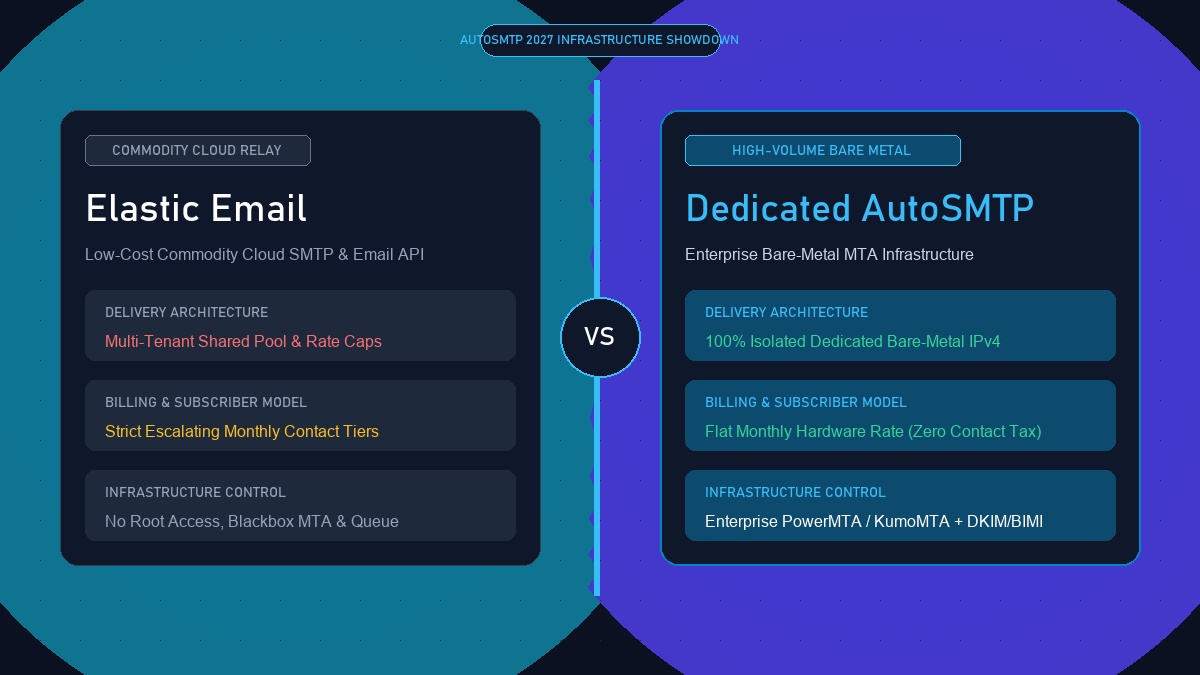
← Email Infrastructure Comparisons 2027 Infrastructure Architecture Review Elastic Email vs Dedicated Infrastructure: 2027 Budget Cloud Relay vs Bare-Metal Sovereign MTAs Executive Summary: Elastic Email has earned a widespread reputation among developers and WordPress administrators as the ultra-low-cost commodity SMTP relay, offering outbound delivery at an aggressive $0.15 to $0.50 per 1,000 messages. However, its […]