


← Email Infrastructure Comparisons 2027 Infrastructure Architecture Reference Manual vs Automated IP Warming: 2027 Deliverability Engineering, Reputation Calibration & Risk Framework When provisioning a pristine dedicated IPv4 address or spinning up a new sending subdomain, email operators confront an existential requirement: the warm-up curve. A fresh IP address possesses zero historical reputation. To anti-abuse algorithms […]

← Email Infrastructure Comparisons 2027 Infrastructure Architecture Reference High-Volume vs Low-Volume Email Sending: 2027 Thresholds, ISP Throttling & Reputation Topologies In modern deliverability engineering, email sending is governed by a sharp architectural and regulatory dividing line: the 5,000-messages-per-day threshold established by Google, Yahoo, and Microsoft. Senders operating below this threshold (transmitting under 5,000 messages daily […]

← Email Infrastructure Comparisons 2027 Infrastructure Architecture Reference Real-Time Email vs Batch Sending: 2027 Architecture, Latency Budgets & Queue Sharding Modern outbound email infrastructure is split into two conflicting engineering paradigms: latency-optimized real-time messaging (password resets, multi-factor authentication codes, payment webhooks, fraud alerts) versus throughput-optimized batch campaign dispatch (newsletters, behavioral marketing blasts, weekly digests). While […]

← Email Infrastructure Comparisons 2027 Infrastructure Architecture Reference Cloud SMTP vs On-Premise SMTP: 2027 Managed Third-Party vs Sovereign Bare-Metal Architecture Comparison Modern enterprise email systems divide into two fundamentally different deployment models: managed third-party Cloud SMTP relays (Amazon SES, SendGrid, Mailgun, Postmark) versus sovereign On-Premise bare-metal SMTP clusters (PowerMTA, KumoMTA, Postfix). For early-stage startups and […]
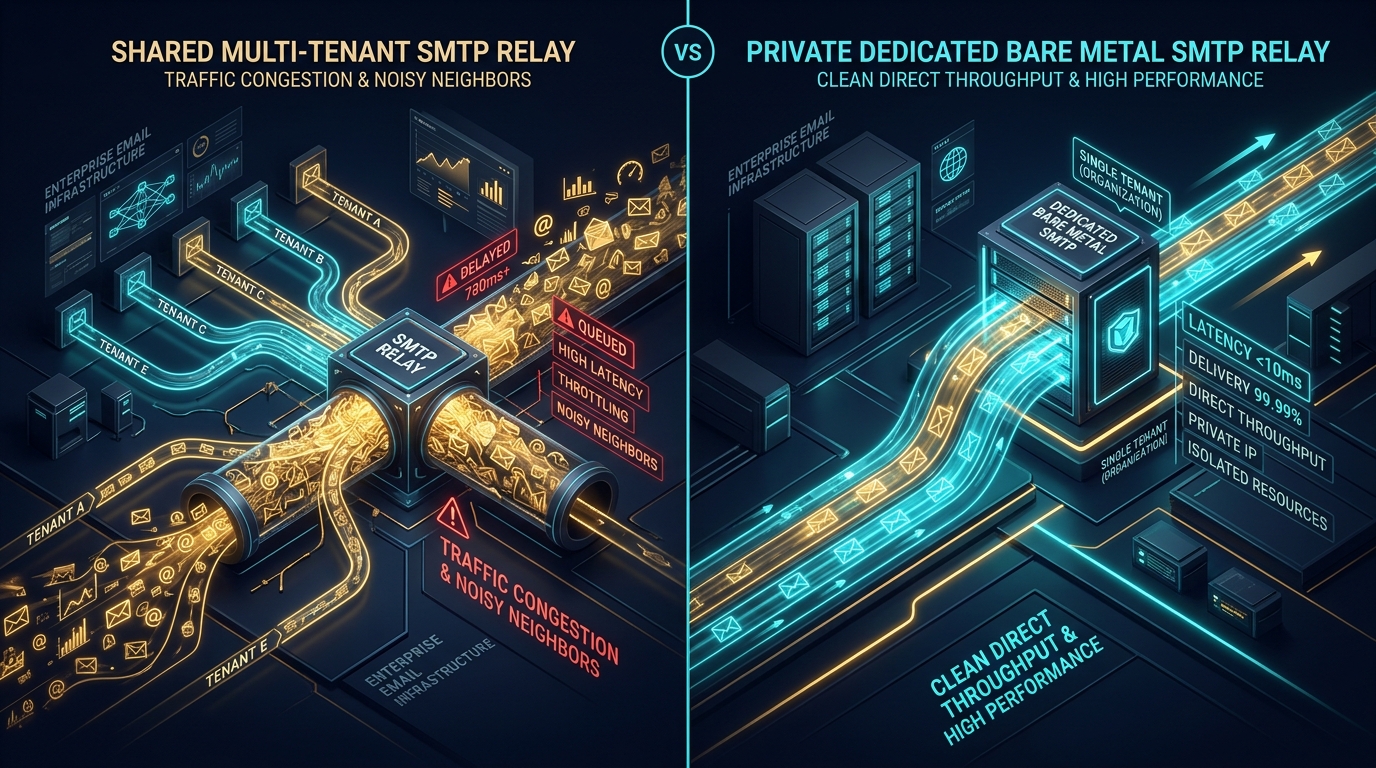
← Email Infrastructure Comparisons 2027 Infrastructure Architecture Reference Shared SMTP vs Dedicated SMTP: 2027 Reputation Isolation, Cost Economics & Transition Thresholds Deciding between shared SMTP relay infrastructure and a dedicated SMTP server cluster is the single most consequential architectural choice in email deliverability. Shared SMTP aggregates outbound message traffic from dozens—or hundreds—of distinct customers across […]
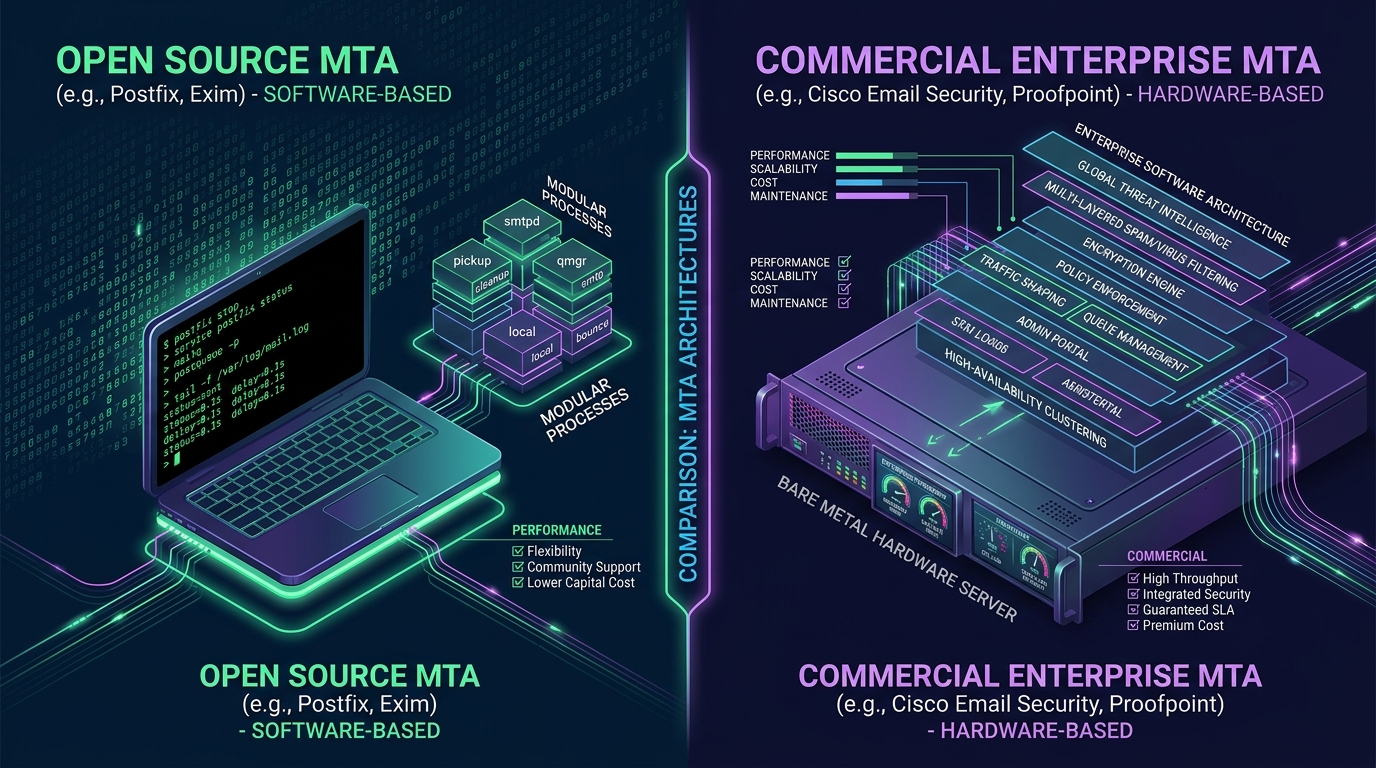
← Email Infrastructure Comparisons PowerMTA Hub → 2027 Infrastructure Architecture Reference Open Source MTA vs Commercial MTA: 2027 Postfix/KumoMTA vs PowerMTA/MailerQ Comparison Selecting the Mail Transfer Agent (MTA) layer for high-volume email infrastructure centers on a critical strategic choice: community-driven open source vs. vendor-licensed commercial software. For over two decades, commercial MTAs—most notably Port25 PowerMTA […]
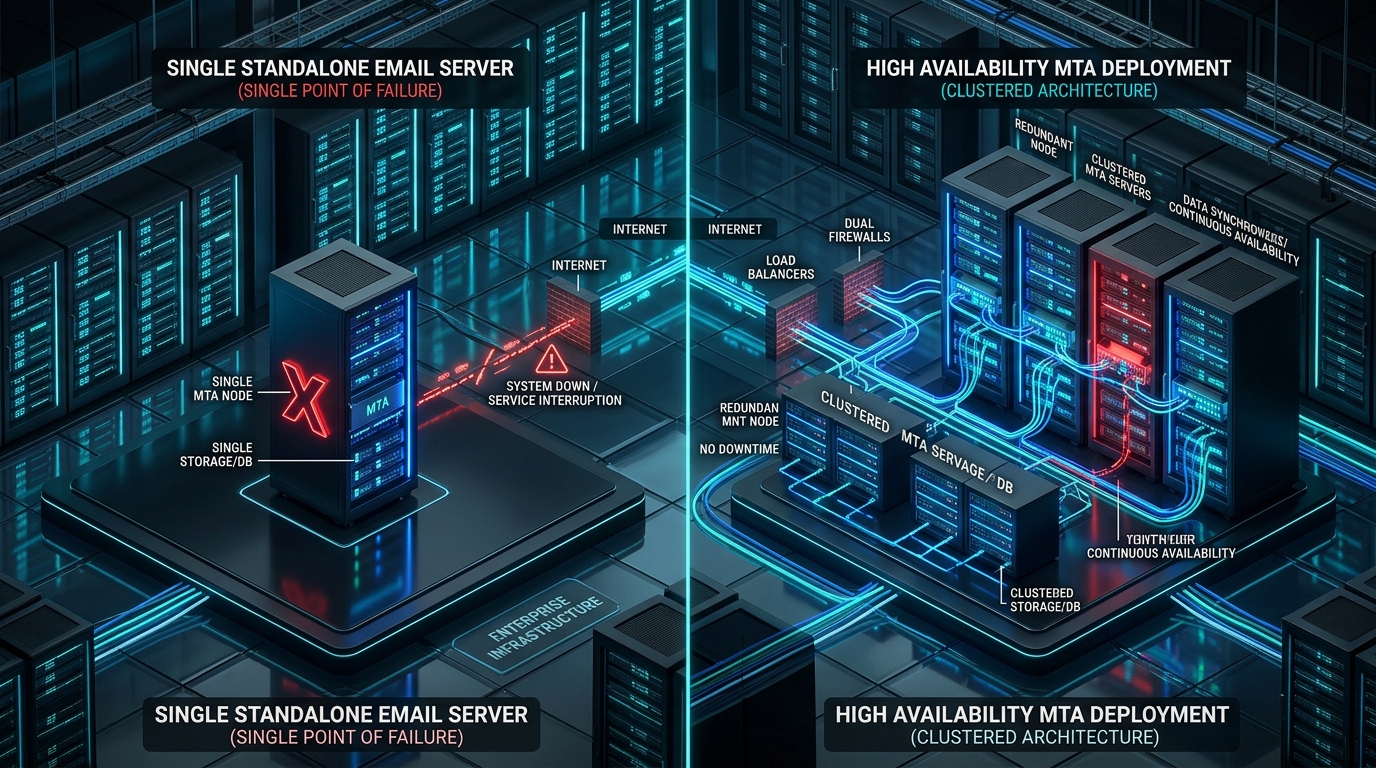
← Email Infrastructure Comparisons 2027 Infrastructure Architecture Reference Single Server vs Multi-Server Email Infrastructure: 2027 Scaling, Failover Patterns & Queue Sharding Modern email architecture is defined by three competing operational forces: throughput velocity, high availability (99.99% uptime), and engineering complexity. A single-server architecture consolidates all mail delivery layers—MTA submission, local disk spooling, DKIM signing, authentication […]
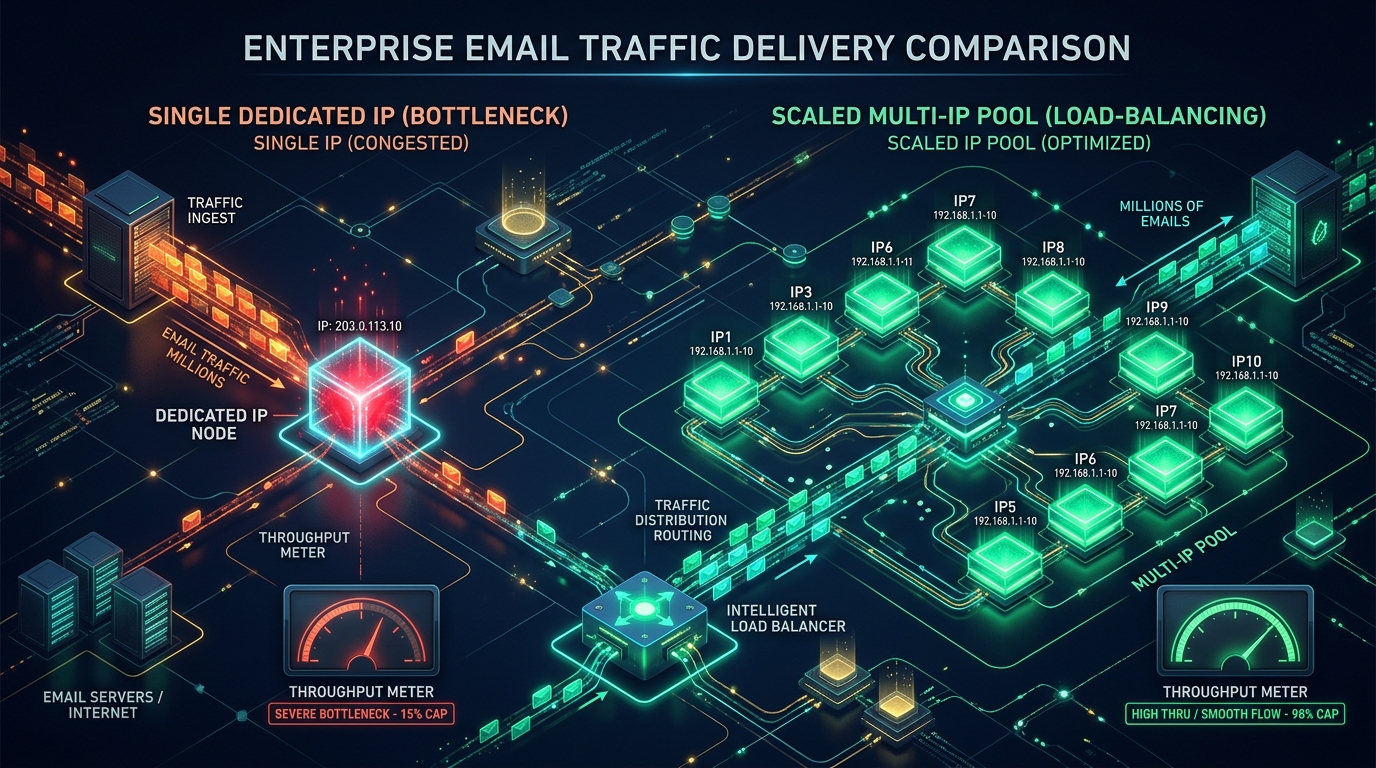
← Email Infrastructure Comparisons 2027 Infrastructure Architecture Reference Single Dedicated IP vs Multi-IP Pool: 2027 Volume Thresholds, Pool Architecture & Deliverability Mechanics Every scaling email programme confronts a defining operational crossroads: relying on a single dedicated IPv4 address versus architecting a multi-IP pool. A single dedicated IP represents total concentration: one IP, one reputation score, […]
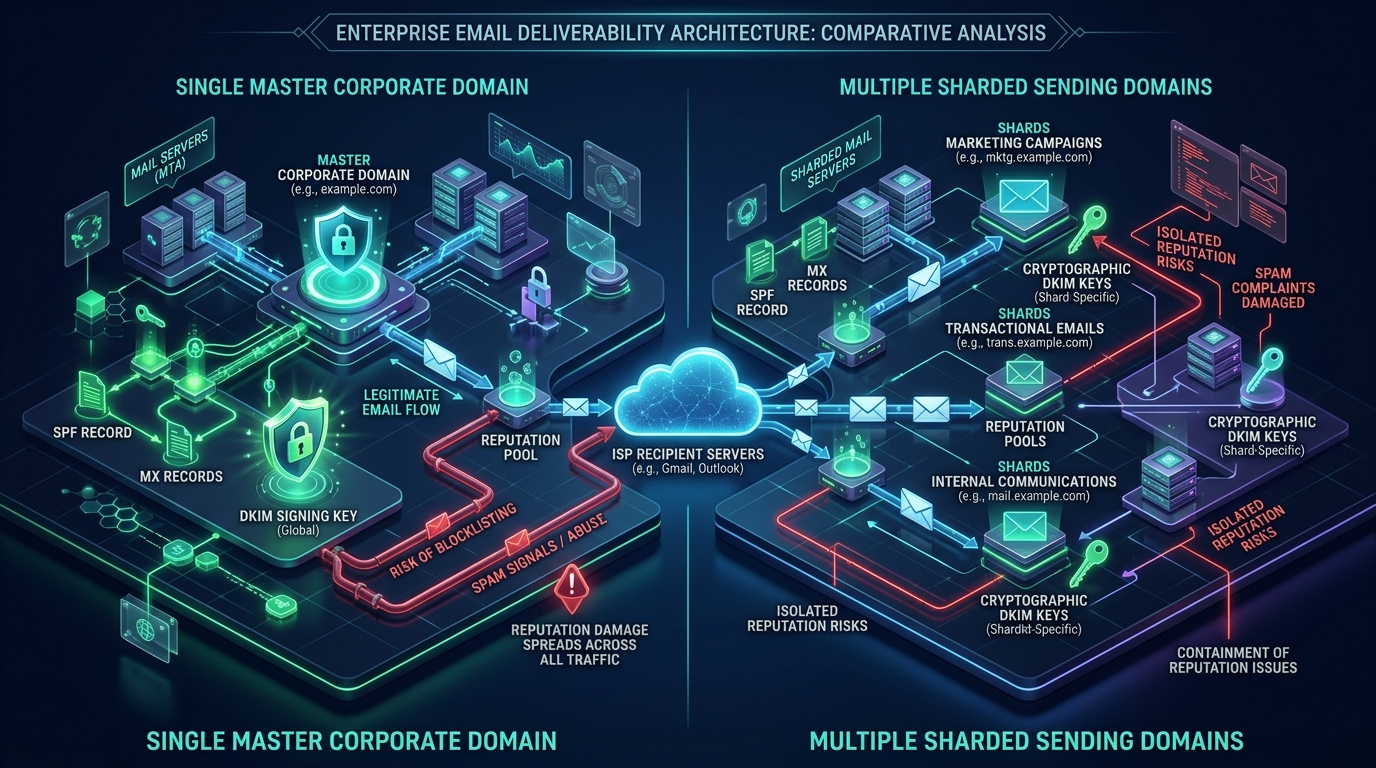
← Email Infrastructure Comparisons 2027 Infrastructure Architecture Reference Single-Domain vs Multi-Domain Sending: 2027 Reputation Isolation, Volume Thresholds & Subdomain Topologies Designing an enterprise email sending architecture centers around a fundamental architectural trade-off: simplicity vs. blast-radius isolation. A single-domain architecture dispatches all outbound streams (transactional alerts, billing notices, marketing newsletters, and sales inquiries) from a unified […]
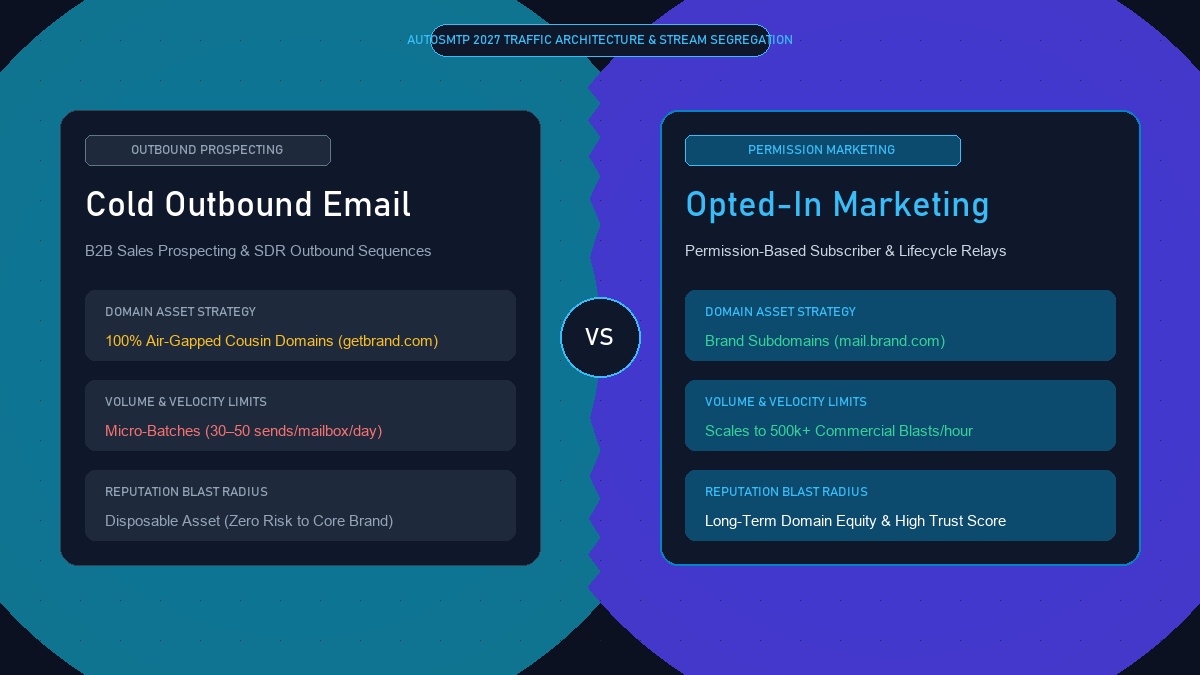
← Email Infrastructure Comparisons 2027 Infrastructure Architecture Reference Cold Email vs Marketing Email Infrastructure: 2027 Multi-Inbox Architecture, Compliance & Stream Separation Cold outreach and opt-in email marketing represent two fundamentally incompatible operational paradigms. Marketing email infrastructure is built around high-throughput, concentrated sending from centralized dedicated IP pools or cloud ESPs (SendGrid, Mailgun, Klaviyo), delivering millions […]